

Table of Contents
In games, we often talk about immersion—about getting lost in a world so convincingly crafted that the edges between fiction and reality blur. But what really sells that illusion? It’s not just high-res textures or ray-traced lighting. It’s people. Or rather, the illusion of people.
When the NPCs (non-player characters) don’t just exist as quest-givers or vendors, but feel like actual members of a functioning society—with jobs, routines, gossip, and grudges—that’s when a game world feels alive. The games below stand out because their cities aren’t just backdrops; they’re ecosystems. You’re not the only story being told—they make you feel like just one thread in a much larger tapestry.
Let’s take a stroll through ten game worlds where the locations don’t just exist—they live, breathe, and sometimes even talk back.
Kingdom Come: Deliverance II
A Medieval Town Where Time Doesn’t Stop for You

Kingdom Come: Deliverance II is a story-rich, first-person RPG set in 15th-century Bohemia, where you play as Henry, a blacksmith’s son thrust into the political and personal chaos of a war-torn region—no dragons, no magic, just mud, steel, and moral gray areas.
What sets this sequel apart isn’t just its staggering historical fidelity to medieval life, but how its world feels lived in: NPCs have full daily routines, react dynamically to your choices, and remember your past deeds, whether honorable or heinous. Whether you’re riding through serene woodlands, catching a ride on a wagon while soldiers trade small talk, or crafting gear with a blacksmith’s touch, the game continuously surprises with emergent, unscripted moments. Add in a branching narrative with meaningful consequences, authentic period dialogue, and an uncompromising dedication to immersion, and it’s no wonder Deliverance II can feel less like playing a game and more like stepping into a functioning society that doesn’t pause when you walk away.
X4: Foundations
A Living, Breathing Universe Where You’re Just One Player Among Thousands

X4: Foundations is a massive, open-ended space simulation game that blurs the line between first-person star pilot and full-scale interstellar empire manager. The game offers a fully simulated universe with thousands of ships and stations conducting trade, mining, warfare, and expansion—all dynamically reacting to your actions. Players can start small, hauling freight or dogfighting in a nimble scout, and eventually grow into industrial magnates or fleet commanders, directing mining operations, constructing modular space stations, and commanding capital ships across contested sectors.
What makes X4 stand out—and why it belongs on any list of games with dynamic worlds—is how its persistent universe evolves with or without you. The galaxy feels alive, reactive, and rich with emergent storytelling that makes every long session feel like a page in your own spacefaring epic, whether you’re walking through the glass halls of your self-built station or watching AI factions wage full-on wars.
Skyrim
A World That’s Scripted, But Still Feels Alive

The Elder Scrolls V: Skyrim Special Edition earns its place on any list of games with the most dynamic and “alive” worlds thanks to how convincingly it simulates a living, breathing society. Towns bustle with routines, NPCs chatter and quarrel, and distant conflicts spill into your path in unscripted ways. You might follow a bard to the inn, witness a vampire attack at nightfall, or stumble into a political skirmish between factions mid-travel.
Skyrim’s world feels organic—not because every NPC is deeply complex, but because their behaviors, relationships, and reactions create the illusion of continuity. Combined with a vast modding community that enhances immersion, and systems that respond to your every decision, Skyrim remains one of the strongest examples of a fantasy setting that doesn’t just exist for you—it exists with or without you.
Fallout: New Vegas
Societies in Ruin, But Not Without Structure

Fallout: New Vegas is a post-apocalyptic open-world RPG set in the scorched Mojave Wasteland, where you—The Courier—wake up after being shot in the head and left for dead. What starts as a revenge story quickly unravels into a politically charged power struggle among factions like the NCR, Caesar’s Legion, and the enigmatic Mr. House, all vying for control of New Vegas.
The game stands out for its staggering role-playing depth: nearly every quest, faction, and character interaction is shaped by your decisions. Its reputation system and branching narrative allow you to truly shape the world around you, whether by diplomacy, deception, or sheer firepower. Despite its janky engine and bugs (which the modding community has lovingly patched over the years), New Vegas remains one of the richest, most reactive game worlds ever built—alive with complex moral choices, unforgettable characters, and an intoxicating blend of Western grit and nuclear decay.
Shadows of Doubt
Procedural People With Personalities

Shadows of Doubt is a one-of-a-kind sandbox detective sim set in a procedurally generated, dystopian noir city where every citizen lives out their own schedule, job, and secrets. You play as a private investigator tracking down killers, breaking into apartments, and piecing together complex cases using fingerprints, surveillance footage, emails, call logs—even discarded receipts. It’s a moody, chaotic, and brilliantly immersive experience where the world doesn’t wait for you.
What makes Shadows of Doubt truly special isn’t just its emergent storytelling or layered investigations—it’s the fact that solving a case feels genuinely earned. No two playthroughs are the same, and even a wrong lead can spiral into a story you’ll be telling for weeks.
Dwarf Fortress
Civilization As a Spreadsheet, And Yet Somehow More Alive Than Most Games

Dwarf Fortress is less a game and more a living, breathing ecosystem of fantasy life, tragedy, and absurd beauty. Developed over two decades by a pair of brothers, this legendary simulation tasks you with building and managing a fortress carved into the bones of a procedurally generated world—where every creature, artifact, and catastrophe has its own history. The gameplay is a mix of construction, colony management, and emergent storytelling, with your dwarves’ lives unfolding in shockingly detailed ways—one may forge a masterpiece coffin moments before dying, another might rise from the dead to haunt your guards.
Its complexity can be overwhelming, but it’s precisely this depth that births unforgettable stories, from baby ghosts seeking revenge to drunk children wielding donkey bone axes. With its somewhat recent Steam release introducing pixel graphics, tutorials, and mouse support, Dwarf Fortress is finally more accessible—without losing any of its uncompromising soul. In fact, it just celebrated 1,000,000 sales. It belongs on this list not just for its gameplay, but because no other game so gleefully turns your failures into folklore.
Red Dead Redemption 2
America’s Dying Frontier, Lived One Detail at a Time

Red Dead Redemption 2 is a slow-burning, cinematic epic that sinks its spurs into your soul. Set at the twilight of the American frontier, it follows Arthur Morgan and the Van der Linde gang as they outrun the law, civilization, and their own unraveling ideals. What begins as a gunslinging outlaw fantasy soon transforms into a character-driven drama filled with gut-wrenching choices and quiet, reflective moments—like brushing your horse, listening to fireside conversations, or stumbling upon a drunken barber bragging about his kill count.
The gameplay is richly layered, balancing gunfights, exploration, hunting, and open-ended roleplaying in a jaw-droppingly realistic world, where even your horse’s physiology responds to the weather (yes, you’ve heard right about the shrinking balls). Every inch of the map pulses with life, from the way vultures circle fresh kills to strangers remembering your drunken brawls days later. And Arthur? He’s one of the most human protagonists in gaming. With unmatched detail, emotional weight, and player freedom, Red Dead Redemption 2 earns its place as not just a great game, but a modern Western classic.
Yakuza: Like a Dragon
Microcosms of Japanese Urban Life, With Just the Right Amount of Absurdity


Yakuza: Like a Dragon doesn’t just drop you into a city—it drops you into Yokohama, a living, breathing social organism. Ichiban Kasuga’s journey from betrayed yakuza grunt to unlikely hero is the narrative core, but the real magic lies in how the world around him pulses with energy. Every street corner feels purposeful: punks loiter outside convenience stores, desperate men shout about pyramid schemes, elderly folks gripe over mahjong, and your party members casually chat about food or their pasts as you walk.
The game’s turn-based RPG combat may be a tonal pivot from previous entries, but it’s Ichiban’s delusional belief that he’s living inside a Dragon Quest-style game that recontextualizes the city into a playground of absurdity and warmth. There’s a deep humanity here—hidden beneath layers of karaoke bars, trash-collecting minigames, and accidental brawls with diaper-wearing yakuza—that makes Yokohama feel not just real, but lived in. This is a game where society’s outcasts band together, and the city responds to their presence with humor, kindness, and the occasional orbital strike.
Deus Ex: Mankind Divided
A Mirror to Society Through Its Interactions
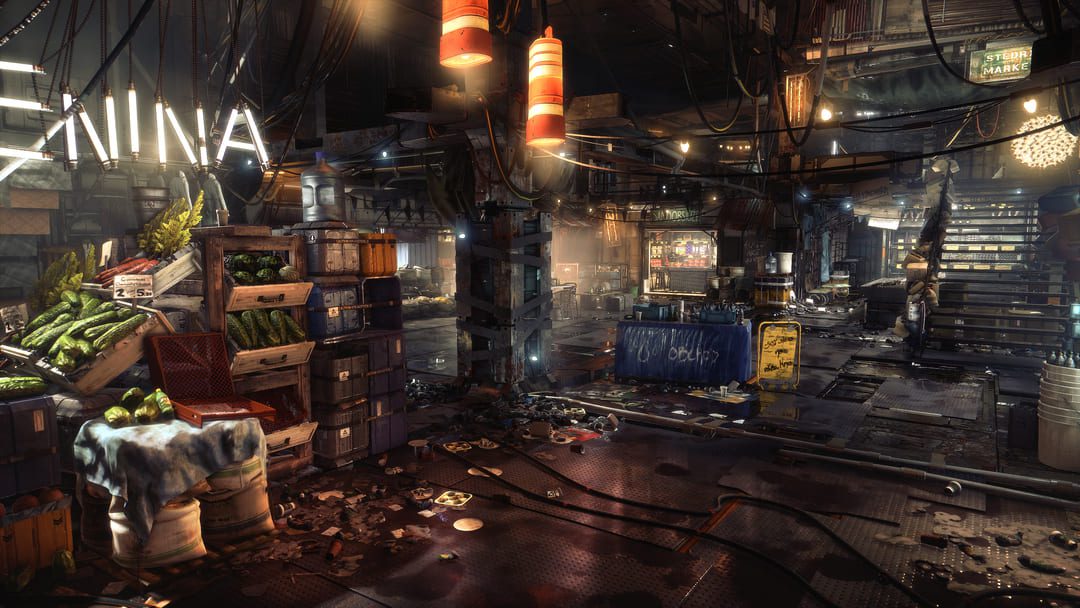
Deus Ex: Mankind Divided earns its place on this list for how vividly it simulates a fractured, surveillance-heavy cyberpunk society in flux. Set in 2029, the game casts players as Adam Jensen—an augmented agent navigating a world that now treats people like him as dangerous outcasts. But what truly brings this world to life is its dense, detail-rich hub city of Prague. Every back alley, locked apartment, and hacked terminal paints a picture of a city unraveling under fear and systemic oppression.
The gameplay lets you approach missions your way—sneak through ventilation shafts, charm your way past guards, or go in guns blazing—while the web of side quests and overheard conversations reveal stories of prejudice, resistance, and ordinary people just trying to survive. For all its flaws—cut content, a rushed ending, publisher meddling—the game’s world feels eerily plausible, even prescient. It’s not just about choice; it’s about living in the consequences.
When Worlds Feel Real
At their best, these games don’t just entertain us—they envelop us. They build societies with messy hierarchies, with cultures, routines, gossip, flaws. Places where janitors clean floors, criminals plot in alleys, and someone, somewhere, is just trying to get home before curfew. Whether it’s a medieval hamlet, a noir-drenched city block, or a decaying orbiting space station, the illusion of life is crafted through small, deliberate details—NPCs with purpose, locations that change without you, stories that don’t center on your heroics. In these worlds, you’re not the main character. You’re just passing through. And somehow, that’s what makes them feel real.
FAQ: Games Where Cities Feel Alive
What are the best games where cities feel alive and responsive to player actions?
Some of the most acclaimed games where cities feel alive include Red Dead Redemption 2, Skyrim, Deus Ex: Mankind Divided, and Yakuza: Like a Dragon. These games feature dynamic NPC routines, evolving social environments, and systems that react meaningfully to your decisions.
Are there any games with living cities that aren’t set in fantasy or historical worlds?
Yes—Shadows of Doubt and Deus Ex: Mankind Divided are strong examples of games where cities feel alive in modern or near-future settings. Both present dense urban environments filled with citizens who follow schedules, respond to your presence, and create a sense of believable society.
Do games where cities feel alive tend to be RPGs or open-world games?
Most games where cities feel alive are either open-world RPGs or simulations. Titles like Fallout: New Vegas and Kingdom Come: Deliverance II focus on player-driven storytelling and exploration, while games like X4: Foundations and Dwarf Fortress offer deep systemic worlds where society evolves independently of the player.
Which games simulate society in the most complex ways?
For players seeking maximum complexity, Dwarf Fortress and X4: Foundations stand out. These games don’t just create the illusion of life—they simulate entire ecosystems, economies, and individual decision-making at massive scale.
Are there any games where NPCs remember what you’ve done?
Yes. In Kingdom Come: Deliverance II, Red Dead Redemption 2, and Deus Ex: Mankind Divided, NPCs often remember your actions—whether it’s a past crime, an act of kindness, or a key decision in a quest—which helps the world feel reactive and lived-in.